Home Blog Page 6

Black Youth & The Verdict: A look toward sentencing in America’s highest-profile case of police murder.

0

Former Minneapolis Police officer Derek Chauvin will be sentenced Friday for the murder of George Floyd. And as the sentencing date nears, people are reflecting on what justice means in this flashpoint case.

In April, Chauvin, was convicted of murder and manslaughter convicted of second-degree murder, third-degree murder, and second-degree manslaughter. Through all of this, there were some voices that hadn’t been fully recognized or heard.

Today they will be; here is the Black youth’s response to Chauvin’s guilty verdict and their expectations for his sentencing.

Dasani Armstrong, a 16-year-old 10th-grade student at Reading Senior High School, said Chauvin’s conviction is complex. “I believe that the ruling was correct,” Dasani said. “The fact that he was convicted to begin with is something that is great and I’m grateful for, but it isn’t something I rejoice about.”

Other students echoed similar sentiments. Elyssa Elliott is also a 16-year-old 10th-grade student at Reading Senior High School. She said justice in Floyd’s murder is nearly unattainable.

“For the very first step, yes, I believe justice was served, but there are many more steps we must take.” Elyssa said. “True justice would be George Floyd being alive.”

Christina Thomas, another 16-year-old 10th-grade student at Reading Senior High School, also said Chauvin’s guilty verdicts do not begin to rectify injustices perpetrated on communities of color, which deserve to be heard and treated equally.

“For far too long law enforcement has used “they were being violent” or seeing a “weapon” as a way to justify their murders,” Christina said. “They see us as crazy, “ghetto,” and uneducated no matter how well we do, and that alone is enough reason to feel this way.”

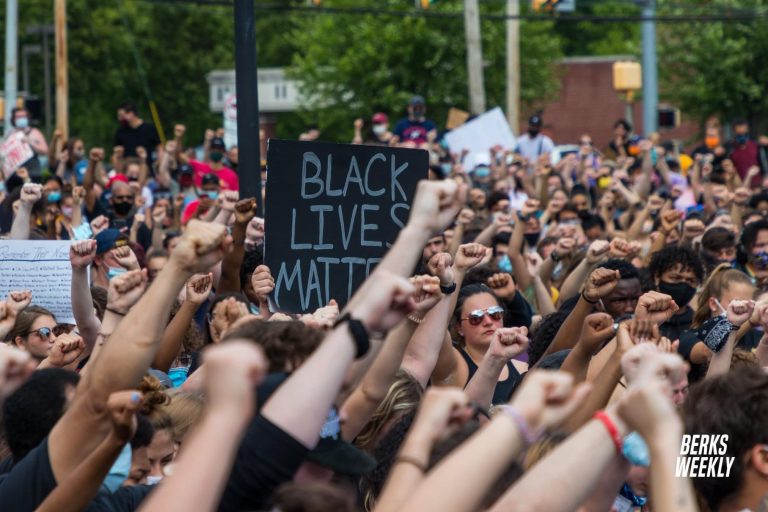
Floyd’s death put renewed momentum behind the Black Lives Matter (BLM) movement, a major protest political reaction to police brutality and systemic inequality the Black community faces. It has become a rallying point for supporters of police reform while also being a target for harsh criticism by some.

The students said they feel that the social movement influenced the outcome of the trial.

“I truly believe that the BLM movement paved the way to this verdict.” Christina said “With BLM, we made progress, we went to the streets and fought for justice. I feel that BLM progressed us to this point.”

Elyssa feels similarly. “Without this movement, we wouldn’t have people to spread the information and keep these injustices in the forefront of the opposing people’s minds.” Elyssa said.

The students spoke on if they believe the verdict would change lives beyond that of Chauvin.

“I do not think this ruling is igniting a new era nor do I think this is lighting a new fire under our government to change any of their old ways.” Dasani stated. “I believe the killings that these cops are committing will now be better covered up; it’s easier to continuously hide a situation or hide the truth than to give it to the people.”

“To them, we are simply flies buzzing around their heads only being swatted at for moments of peace,” she added.

Elyssa said she expects police will be more closely monitored. “I feel as though law enforcement will be closely analyzed and watched, but I don’t believe it’s going to cause more change due to the amount of time it took them to charge this single man of a crime he so blatantly and unapologetically committed,” she said.

Christina said enacting racial justice is hard, but Chauvin’s conviction does move the needle.

“I feel that this is all a start of progress,” Christina said. “Regardless of how small this action is, it’s still action. The system is heavily broken and there’s still a ways to go, but I hope the system can work towards fixing itself.”

Christina is suspicious that Chauvin may receive some special privileges. “I would not be shocked if the sentencing ends up being the minimum amount of time,” Christina said. “I feel that he should serve life, what he did was plain out wrong and grants him a life sentence in my opinion.”

Dasani thinks the sentencing will be lenient. “I think he’s going to be given something in the middle,” Dasani predicts. “They’re going to give him what keeps the Black community content.”

Elyssa said overall, she does not think sentencing can bring closure to the case. “I feel that no matter the number of years he is given, the Black community will always want more,” Elyssa said. “Because nothing is long enough or harsh enough to make up for the grief that his family, friends, and America felt when George Floyd was murdered.”

Dasani said police accountability is only one facet of making a more just society. “Remember, our entirety of Black problems and discrimination is not simply based upon police brutality,” Dasani said. “So, I do believe that if more cops get charged and fewer murders are covered up then yes it would solve part of the problem, not the entirety of it.”

Christina said no matter the sentencing, she would like to see more proactive measures to protect Black people when dealing with the police.

“This is a cycle that’s never-ending because there are no real systemic changes being done to prevent it,” Christina said. “We need to start moving towards preventing it.”

Elyssa said she feels like some people outside of the Black community will never understand the extent of what they face.

“They want our rhythm, but they don’t want our blues.” Elyssa said. “They will always want us when we’re providing something for them, otherwise they could care less about the sorrows that have poisoned our community for centuries.”
How a Student who Learns Differently is Impacted by the Pandemic

Time passes by, but Ezequiel’s is frozen. Every tick of the clock drives him closer to his dreaded reality. In less than four hours, the project that will decide his fate as a sophomore in Reading High School is due.

Will Ezequiel have to say goodbye to AP World History?

This question has managed to give him more headaches than he could count with both hands. This assignment, given to him over the summer, has been dwelling in the back of his brain for months, awaiting the moment it will be dealt with at last.

He had to read an assigned book and create a summary of every chapter. Now that the deadline is approaching, anxiety pushes forward and floods his senses.

Ezequiel has autism and ADHD; he has a gentle personality; he is kind to everyone despite having difficulties understanding them at times. And he loves video games—the protective form of entertainment that offers him the feel-good hormone serotonin he has difficulty producing. Playing video games has become an escape from the stressors filling up his head every day.

Ingrid Valerio, a mental health clinician from the Family Guidance Center, was kind enough to offer some insight on how neurodivergent individuals like Ezequiel often fixate on activities they enjoy.

“Their struggles tend to root at the most basic function of our brain,” Valerio said. “In a way… it almost serves as a protective factor against stressors related to the social environment.”

In an effort to harness a feeling of comfort, he focuses on the intricate fictional gaming worlds designed specifically to send soothing signals to his brain. School and his project are reduced to a small spec in his mind he’d rather keep ignoring.

Neurodivergency vs Neurotypical

Neurodivergent comes in many ways, but usually it refers to a difference in mental needs and processes. People with autism, ADHD, and dyslexia all fall under the neurodivergent umbrella.

In general, being neurotypical makes hurdles and problems easier to get over, as they don’t deal with the many social and communication troubles neurodivergent people do. To this day, many do not realize the real difficulties of what is living a neurodivergent life.

“It takes a lot of mental strength for me to actually get to the state of mind neurotypicals are by default,” Ezequiel said. “Because of this, I’m always exhausted and feeling burned out.”

Society’s neurotypical expectations of work are harmful to neurodivergent individuals, especially students who are already struggling.

Ezequiel explains that often, he ends up pushing himself to a point of exhaustion, gets discouraged after not reaching the neurotypical ideal, and experiences an implacable surge of burn-out.

For Ezequiel, who is a part of Reading High School’s Gifted and Talented Education, these expectations fall on him like concrete blocks.

Ezequiel’s problems don’t revolve around the due date, but his environment. The feelings of teachers and staff not understanding his position. Expectations specifically shaped around a group of individuals he will never be like, is mentally draining, he said.

“You’ve had months,’ they’d tell me,” Ezequiel said, regarding his AP assignment. “And then I’d feel even worse, because it makes me realize just how much their expectations aren’t structured to take me into consideration.”

Valerio also shared some information regarding the understanding and empathy towards neurodivergent students.

“Patience – all adults, teachers, caregivers, anyone involved with the youth,” she said. “And the youth themselves needs to practice patience while engaging in self-care activities to avoid feeling burned out, she said.”

Ezequiel and Valerio also emphasized the importance of caregivers in the life of a neurodivergent individual to be understanding towards them. A lack of understanding, particularly in school, is a big source of stress for neurodivergent students. School has always had a pace it followed without interruptions for rest.

That was… until now.

Neurodivergency in a COVID world

While the virus is a big stressor for students in and of itself, a lot of neurodivergent students attest to the help it has offered them.

“Online learning has allowed me more freedom, and a sense of peace away from merciless teachers and lessons,” Ezequiel said.

Thanks to the lifted stress of no longer having to attend school in-person, the students have been able to navigate through life with less weight on their shoulders. The assignment for AP World History in particular, was pushed back by several weeks, giving Ezequiel’s mind enough time to adjust back to school.

On the other hand, the lack of information about neurodiversity may lead some to see it as an excuse for students to goof off or blatantly disregard the instructions given to certain students.

“The new schedules at school and intervention periods help me be calm enough to do work.” Ezequiel said. “Seeing teachers be mad about the new policies makes me feel like solving my issues is just a hassle to them.”

Getting tagged as the class clown, lazy, or someone simply trying to goof off, while they’re doing nothing but feeling stressed and burned-out, does nothing to solve the problem. Ingrid Valerio describes why that is.

“Students with ADHD get labeled as lazy or defiant, without considering the ongoing races of thoughts and impulses that cause difficulties with quick judgment of consequences,” Valerio said.

The curriculum or your student’s mental health?

Mental health was not a part of the conventional curriculum in classes, and was seldom mentioned during in-person lessons, but during Covid, school has become more flexible, and a light has been shone into the spiral of complexity that is mental health.

Teachers are more understanding, and school is less demanding and grueling – done in an attempt to keep students sane in these times of uncertainty, this is exactly what neurodivergent students had needed through their entire school career.

“After a long and fumbly discussion with my teacher, I heard some beautiful words I thought I would never be told. ‘I’ll give you another month, because I know that life is hard right now.’” Ezequiel said. “And it was almost enough to make me tear up.”

“All this time, all I wanted was for my teachers and the adults in my life to understand my struggles. Who knew it would take a whole pandemic?”

Thanks to an intervention by Ezequiel’s support group, the school had given Ezequiel an extended time period for the assignment.

Working through it with patience, seeking to understand it — and not being afraid to take breaks due to the reassurance of those around him — Ezequiel finished the assignment two hours before it was due, maintaining his place in AP World History for the rest of his sophomore year.

Anthony Orozco: WITF Reporter, Berks Poet Laureate, and Member of Barrio Algeria

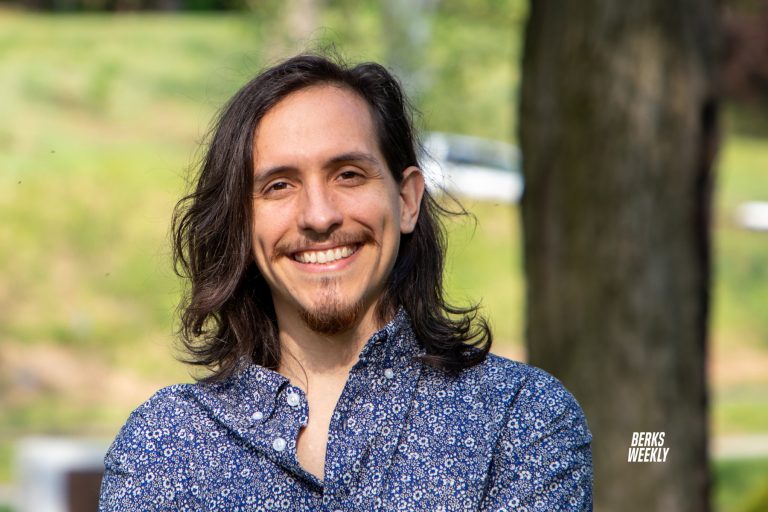
In the heart of Reading, Pennsylvania, amidst the bustling City Park, lies a man dedicated to unraveling the tapestry of stories that weave through the community. Anthony Orozco, a journalist with a fervent passion for storytelling, graciously shared his journey, aspirations, and the impactful work he does within the city.

Originally from Cincinnati, Ohio, Anthony’s path to Reading was serendipitous. Armed with a journalism degree from the University of Cincinnati, his pursuit of a career in reporting led him to knock on the doors of various newsrooms. It was Reading that answered the call, providing him with an opportunity to fill a much-needed role as a Spanish-speaking reporter, delving into the vibrant Latino community of Berks County.

Reflecting on his journalistic roots, Anthony recounts the trials and triumphs of his tenure at the Reading Eagle. Over seven years, he immersed himself in the fabric of Berks County, covering everything from rural school districts to city hall meetings. The experience, he admits, was akin to being thrown into the trenches, navigating unfamiliar territory with each assignment.

Yet, it was within these challenges that Anthony found his stride. His dedication to understanding and amplifying the voices of the Latino community resonated deeply. With each story, he sought to bridge gaps and shed light on the nuances of their experiences, challenging stereotypes and misconceptions along the way.

As his journey evolved, so did his storytelling arsenal. Venturing into the realm of audio journalism, Anthony embraced the dynamic world of radio reporting, honing his skills in crafting compelling narratives that transcend the airwaves. With each project, he delves deeper into the essence of storytelling, capturing the essence of individuals and communities through sound.

Beyond journalism, Anthony’s passion for community activism shines through. Through organizations like Barrio Alegría, he champions the arts as a vehicle for social change, empowering individuals to share their voices and perspectives. His work extends into the realm of education, where he mentors aspiring storytellers, guiding them on their journey to self-expression.

Looking ahead, Anthony envisions a future filled with boundless opportunities for storytelling. Whether through best-selling poetry books or in-depth investigative reports, his mission remains unwavering—to unearth the stories that shape our world and amplify them for all to hear.

As our conversation draws to a close, Anthony leaves us with an invitation to join him at an upcoming open mic event, where the community will come together to celebrate the power of storytelling. With his long hair and signature headphones, he stands as a beacon of inspiration—a testament to the transformative power of storytelling in our lives.

To connect with Anthony and explore the vibrant tapestry of stories within Reading, reach out to him on Twitter (@anthonyorosco20) or via email at anthony_orozco@witf.org. And mark your calendars for the open mic event on May 4th at the Band Shell, where the magic of storytelling awaits.

Student Designers share inspiration behind Albright Divine Fashion Show

0

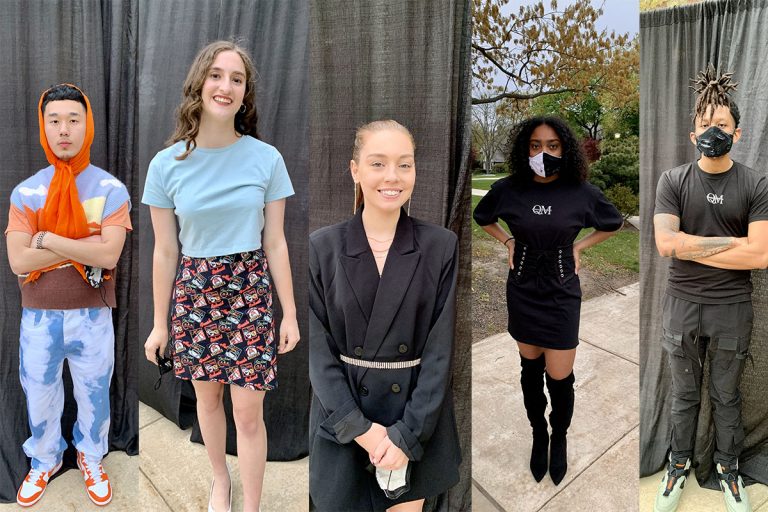
On Saturday, Albright College students hosted the Divine Fashion Show. Organizer Starlene Williams, an Albright senior and fashion designer, said that she chose the name Divine to celebrate the creations of her fellow designers.

To cheers and shouts of “yaas,” the glamorous models strutted down the runway on Albright’s Science Field.

There was not only fashion for the Albright students that gathered Saturday night but live music and performances, everything from original rap songs to champion Irish dancer Haylee Kirk. I got a chance to chat with some of the student designers and do a Q&A with them:

Starlene Williams, senior

Where are you from? Reading

What inspires you? Everything inspires me. What I see on social media, on the streets, celebrities, nature. We can get inspiration from anywhere we look. 

Who is your personal style icon? I really love Rihanna and Zendaya’s styles.

If you could raid anyone in the world’s wardrobe, whose would it be? Probably Ariana Grande.

What statement did you want to make with your designs tonight? I wanted people to know that the models were comfortable as well as confident in their looks. They were all meant to symbolize the same thing which is being confident in yourself and expressing yourself. 

What are three words that best describe your designs? Street, classy and comfortable. 

What are your plans for after you graduate? I would like to open my own boutique and sell stuff that I feel everybody could kind of aim towards and feel comfortable wearing. 

Tshedup Lama, junior

Where are you from? Nepal, but I grew up in Queens, New York

What inspires you? A lot of my collection is based on artwork. Trying something new. Since our fashion industry is going towards sustainability now, I’m doing upcycling now. My brand is called Unfinished by Dupos. (His nickname since childhood) 

Who is your personal style icon? I would say Bluboy.

If you could raid anyone in the world’s wardrobe, whose would it be? Bloody Osiris

What statement did you want to make with your designs tonight? I’ve fallen in love with menswear fashion. It’s a mixture of art and street styles inspired by the diverse and unique ambience of New York City. 

What are three words that best describe your designs? Rowdy, artistic and fun. 

What are your plans for after you graduate? My long-term goal is to start my own brand, but after I graduate I would like to start working in New York City or Los Angeles. 

Katelyn Schweitzer, freshman

Where are you from? Bangor, Pennsylvania

What inspires you: My love for bright and bold colors.

Who is your personal style icon? Caroline Vazanna.

If you could raid anyone in the world’s wardrobe, whose would it be? Betse Johnson

What statement did you want to make with your designs tonight? That you shouldn’t be afraid to wear something bold.

What are three words that best describe your designs? Colorful, creative and motivating.

What are your plans for after you graduate? I want to end up in New York City and have my own business and everything.

Quentin Menefee, senior

Where are you from? Philadelphia

What inspires you? My own personal style, which is street and luxury mixed, and I want to send messages through my clothing also. 

Who is your personal style icon? Kerby Jean-Raymond.

If you could raid anyone in the world’s wardrobe, whose would it be? Probably A$AP Rocky.

What statement did you want to make with your designs tonight? I was just trying to talk about how mental health is important, especially when everyone is inside, and especially when the mental health of men is not taken seriously. I also wanted to show how there can be beauty in destruction.  

What are three words that best describe your designs? Bold, beautiful and distressed. 

What are your plans for after you graduate? I hope to become a creative director of a street or luxury company, then I eventually want to start my own brand and have it be a world name. 

Desiya Smith, senior

Where are you from? Philadelphia

What inspires you? With the hardship that happened in 2020, I use grays and yellows to incorporate how gray 2020 was and how bright 2021 will be. 

Who is your personal style icon? Aaliyah

If you could raid anyone in the world’s wardrobe, whose would it be? Rihanna’s

What statement did you want to make with your designs tonight? To just be you and be bold, be cheerful. 

What are three words that best describe your designs? Fun, adventurous and unique. 

What are your plans for after you graduate? I plan on making my own brand of lingerie and swimwear, and hopefully getting a store and being able to visually merchandise my work. 

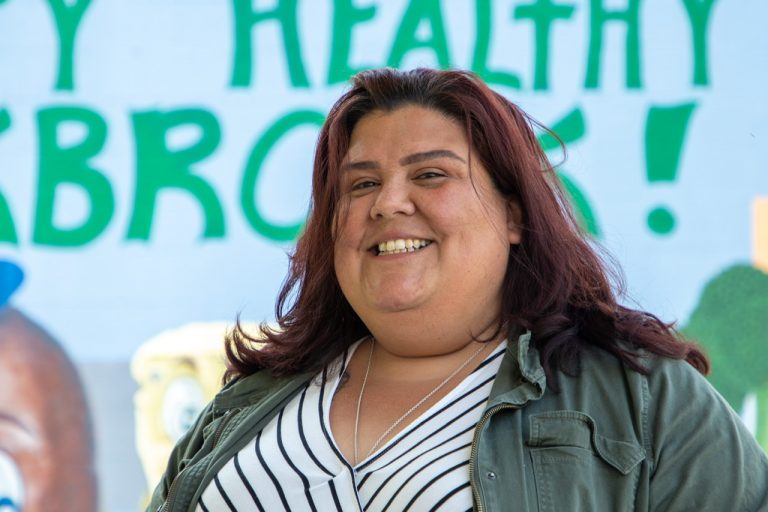
Tanya Melendez: Cultivating Community Garden in Oakbrook

0

​Tanya Melendez has a deep love of the natural beauty contained within the city of Reading. Whether she is enjoying bike rides on local trails, walks to local parks, or watching her daughter climb trees, she has a true appreciation for the joy that nature brings to communities.

Through her volunteer work with the 18th Ward of Reading, she is eager to bring nature to residents in a new and exciting way: A community garden, called “Cultivating Community at Oakbrook”

​“This year has highlighted the need for food security,” said Melendez, in reference to the shortages caused by the pandemic. “Normal, everyday people…[were] really afraid about not having enough food for their kids. My way of controlling that was to create a veggie garden at home.”

Melendez shared that the Victory Garden Task Force (named after the “Victory Gardens” planted during WWII by those on the home front) assembled take-home mini gardens for families in Reading last year. The take-home gardens were, however, only the beginning.

​An opportunity arose for Melendez to apply for a grant to plant a community garden in Reading. This grant inspired multiple donors to come forward and offer everything from soil testing, to land, to water and rain water barrel donations. Melendez shared that they are currently planning the layout of the garden and waiting on results from the soil testing, then, “It’s go time!”.

​The garden will consist of 24 separate single or double plots for people to grow their own vegetables, including at least three ADA raised garden beds that will be accessible to residents in either walkers or wheelchairs.

“[We are] hoping it becomes not only a community garden for 24 families, but a place for the community at large to do things,” said Melendez, sharing that she is planning on various classes concerning everything from horticulture to cooking being offered at the garden.

She also added that they are hoping to build a play area for children in the future, so they can play safely while their parents garden.

​“I love this community,” Melendez shared passionately. “[The garden will] be a wonderful place to learn and to just be.”

​If you want to volunteer your time, gardening equipment, seeds, or anything else that this project might need, please visit their website at residents18thw.wordpress.com, or send Melendez an email at 18thw@gmail.com.